Why Link Quality Is the Ultimate Threat Mitigation Tool

Data Integrity Standards in 2026 Search Rankings
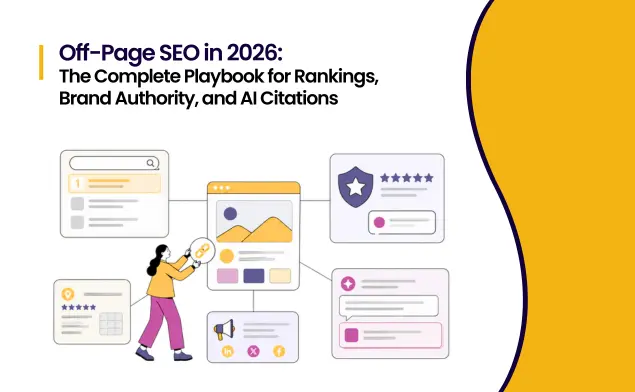
Search algorithms in 2026 have moved far beyond easy keyword matching and standard link counting. The main focus now rests on the authenticity and proven nature of the info being presented. As false information and artificial material became more widespread over the last couple of years, major search engines responded by focusing on information that consists of a clear, traceable history. This shift implies that the quality of a digital footprint is no longer measured by volume, but by how well each information point withstands strenuous verification protocols.Maintaining high requirements for GSA SER Verified List Guide Practical Guides avoids the dilution of brand name signals in a crowded digital environment. When a search engine crawls a page, it tries to find cross-referenced realities that line up with recognized databases. If a link points to a source that does not have accurate grounding or has actually been flagged for inconsistent information, the value of that connection drops to absolutely no. Sometimes, it can even result in a visibility charge. Verification has become the primary filter through which all digital authority should pass.
The Shift from Amount to Proven Provenance
In the earlier years of digital marketing, acquisition of links was typically a video game of scale. Strategists sought numerous points out across a variety of domains to signify importance. In 2026, this strategy is not only inefficient however also brings substantial threat. Modern search bots use neural networks to assess the provenance of a link-- asking where the information came from, who validated it, and whether the hosting domain has a history of accuracy. Strategic quality assurance now involves a deep audit of every referring domain. It is no longer sufficient to take a look at a third-party authority rating. Marketers need to look at the information integrity of the publisher itself. Does the publisher cite its sources? Does it have a transparent correction policy? These aspects figure out whether a link will in fact move the needle in search engine result. Executing rigorous look for GSA SER Verified List Guide Practical List Buyer Guide makes sure that external references stay steady throughout the year and do not trigger flags for low-grade or suspicious habits.
Automated Quality Assurance and Manual Auditing
The double method of utilizing automatic tools together with human oversight has actually ended up being the requirement for verification in 2026. Automation enables the quick scanning of countless prospective positionings to identify warnings, such as unexpected spikes in toxic traffic or a history of hosting AI-generated spam. However, the last phase of quality assurance still requires a human touch to validate the nuances of context and intent.Manual auditing guarantees that the positioning makes sense for the specific market. A link from a high-authority site may look good on paper, however if the material surrounding that link is factually thin or unimportant to the target market, the algorithm will likely discount it. This year, online search engine have actually ended up being far better at detecting "contextual drift," where a link is placed in a post that just tangentially connects to the destination. Premium link building now demands that the data within the source post matches the data on the landing page with high accuracy.
Confirmation as a Shield Against Algorithmic Volatility
Among the biggest difficulties for digital existence in 2026 is the frequency of algorithmic updates. These updates are now near-constant, taking place in real-time as the online search engine gains from brand-new information sets. The only way to discover stability in such an environment is through making use of validated, high-fidelity data. When online search engine see a consistent pattern of verified details throughout numerous platforms, they see the entity as a trustworthy source of truth.This reliability serves as a shield during durations of high volatility. While websites that depend on unproven or low-grade links see their rankings change wildly, those with a structure of confirmed data tend to remain stable. The focus on quality assurance is a long-term play that focuses on the health of a digital profile over short-term gains. By making sure that every piece of information and every external referral is examined for precision, a brand name builds a level of trust that algorithms are developed to reward.
The Role of Third-Party Validation in Link Building
Third-party validation has actually become an essential part of the link-building process in 2026. This involves using independent platforms to confirm that a site is who it says it is and that its material is backed by real know-how. Many online search engine now integrate these third-party trust signals straight into their ranking systems. This may consist of accreditations, expert associations, or verification from industry-specific databases.When planning a link-building campaign, picking domains that hold these third-party validations is a tactical need. A single reference on a website with high-level confirmation is worth more than lots of points out on unproven blogs. This focus on "trust clusters" means that links from within a network of validated sites bring exponential weight. It produces a web of authority that is tough for rivals to replicate through standard, unproven ways.
Information Accuracy and the User Experience
The factor search engines are so focused on confirmed data is simple: it causes a much better user experience. In 2026, users have little persistence for inaccurate info or misinforming links. If a user clicks an outcome and finds that the information supplied is unreliable, they go back to the search results immediately. This "bounce" sends a strong negative signal to the online search engine about the quality of the result.By focusing on verified information, marketers make sure that the user discovers precisely what they are searching for. This alignment between user intent and information precision is the sweet spot for search performance. Quality control in link structure is not just about satisfying an algorithm; it has to do with ensuring that the info environment remains healthy and beneficial for everyone. When links indicate validated, accurate, and useful content, the whole search experience improves, leading to higher engagement rates and better conversion metrics for those who prioritize these requirements.
Looking Ahead: The Future of Quality Control
As we advance through 2026, the tools for verification will only become more advanced. We are seeing the increase of decentralized verification methods where data is checked against several journals to guarantee its credibility. This will make it even harder for low-quality material to slip through the fractures. The move towards a more transparent and verifiable internet is well in progress, and those who adapt their methods to consist of extensive quality assurance will discover themselves at a significant advantage.The shift towards confirmed data marks completion of the period of "black box" SEO where outcomes might be manipulated through large volume. Today, the winners are those who can prove their claims and reveal the work behind their digital existence. Confirmation is the brand-new currency of search, and its worth will just continue to rise as online search engine improve their capability to identify fact from fiction. Method in 2026 is specified by this commitment to precision, making quality control the most vital part of any digital growth plan.