6 Trends Forming the Future of Link Technique in 2026
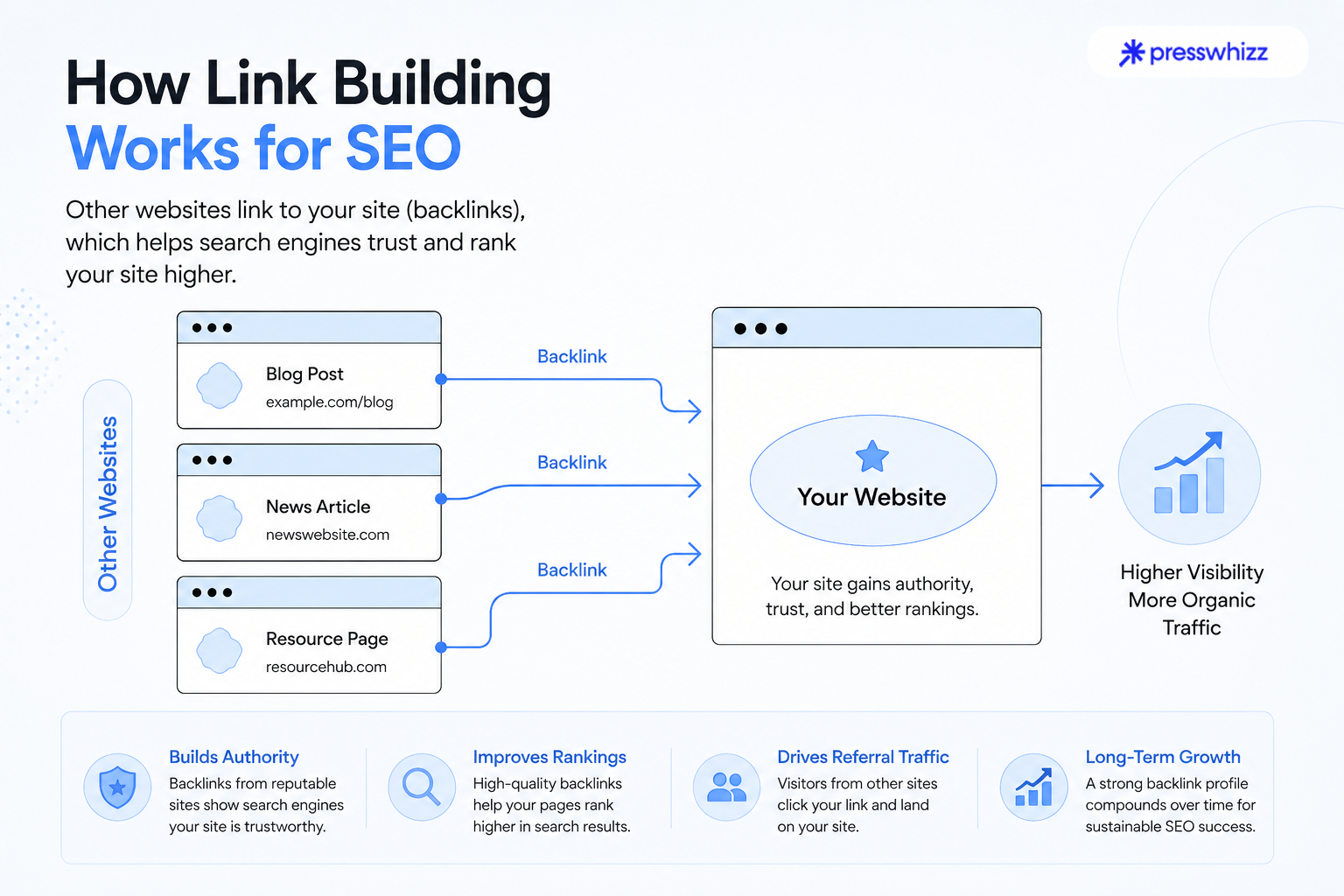
Information Integrity Standards in 2026 Search Rankings

Browse algorithms in 2026 have moved far beyond easy keyword matching and standard link counting. The main focus now rests on the authenticity and proven nature of the details being provided. As misinformation and artificial material became more common over the last couple of years, major online search engine reacted by prioritizing data that includes a clear, traceable history. This shift indicates that the quality of a digital footprint is no longer determined by volume, however by how well each data point withstands extensive confirmation protocols.Maintaining high standards for Asia Virtual Solutions High-Quality Lists avoids the dilution of brand signals in a congested digital environment. When a search engine crawls a page, it tries to find cross-referenced facts that align with recognized databases. If a link indicate a source that does not have factual grounding or has actually been flagged for irregular data, the value of that connection drops to no. In many cases, it can even result in a visibility charge. Verification has actually ended up being the primary filter through which all digital authority need to pass.
The Shift from Quantity to Proven Provenance
In the earlier years of digital marketing, acquisition of links was frequently a video game of scale. Strategists sought hundreds of mentions throughout a range of domains to signify relevance. In 2026, this strategy is not only inadequate but likewise carries substantial threat. Modern search bots utilize neural networks to assess the provenance of a link-- asking where the information originated from, who verified it, and whether the hosting domain has a history of precision. Strategic quality assurance now includes a deep audit of every referring domain. It is no longer adequate to look at a third-party authority score. Online marketers should take a look at the data stability of the publisher itself. Does the publisher mention its sources? Does it have a transparent correction policy? These aspects figure out whether a link will really move the needle in search results page. Executing rigorous checks for Asia Virtual Solutions Quality Link List guarantees that external references remain steady throughout the year and do not activate flags for low-grade or suspicious behavior.
Automated Quality Control and Handbook Auditing
The dual approach of utilizing automated tools alongside human oversight has actually ended up being the requirement for verification in 2026. Automation permits the quick scanning of thousands of potential positionings to determine warnings, such as abrupt spikes in toxic traffic or a history of hosting AI-generated spam. However, the last of quality assurance still needs a human touch to verify the nuances of context and intent.Manual auditing ensures that the positioning makes sense for the particular market. A link from a high-authority site might look excellent on paper, however if the content surrounding that link is factually thin or unimportant to the target market, the algorithm will likely discount it. This year, online search engine have ended up being much better at spotting "contextual drift," where a link is placed in a post that only tangentially associates with the location. Top quality link structure now demands that the data within the source post matches the data on the landing page with high precision.
Confirmation as a Guard Versus Algorithmic Volatility
One of the greatest difficulties for digital existence in 2026 is the frequency of algorithmic updates. These updates are now near-constant, happening in real-time as the online search engine gains from brand-new information sets. The only method to discover stability in such an environment is through the usage of confirmed, high-fidelity information. When online search engine see a consistent pattern of verified info throughout several platforms, they view the entity as a dependable source of truth.This reliability functions as a shield throughout periods of high volatility. While websites that relied on unproven or low-quality links see their rankings vary wildly, those with a structure of verified information tend to stay consistent. The concentrate on quality assurance is a long-lasting play that focuses on the health of a digital profile over short-term gains. By guaranteeing that every piece of info and every external referral is inspected for precision, a brand name develops a level of trust that algorithms are developed to reward.
The Role of Third-Party Recognition in Link Structure
Third-party recognition has emerged as an essential part of the link-building process in 2026. This involves using independent platforms to verify that a site is who it states it is which its content is backed by real competence. Lots of search engines now incorporate these third-party trust signals straight into their ranking systems. This may consist of certifications, expert associations, or confirmation from industry-specific databases.When planning a link-building project, picking domains that hold these third-party validations is a strategic necessity. A single mention on a website with top-level verification is worth more than dozens of points out on unverified blogs. This concentrate on "trust clusters" means that links from within a network of verified sites bring rapid weight. It produces a web of authority that is challenging for rivals to duplicate through traditional, unproven methods.
Data Precision and the User Experience
The factor search engines are so concentrated on validated data is easy: it leads to a better user experience. In 2026, users have little persistence for inaccurate information or deceiving links. If a user clicks an outcome and finds that the data provided is unreliable, they return to the search engine result instantly. This "bounce" sends a strong unfavorable signal to the search engine about the quality of the result.By concentrating on validated information, marketers ensure that the user discovers precisely what they are trying to find. This alignment in between user intent and information precision is the sweet area for search efficiency. Quality control in link building is not just about pleasing an algorithm; it is about guaranteeing that the details community stays healthy and helpful for everybody. When links indicate verified, accurate, and practical material, the entire search experience improves, causing greater engagement rates and much better conversion metrics for those who prioritize these requirements.
Looking Ahead: The Future of Quality Control
As we progress through 2026, the tools for verification will only end up being more advanced. We are seeing the increase of decentralized verification methods where data is checked against several journals to ensure its credibility. This will make it even harder for low-quality content to slip through the cracks. The approach a more transparent and proven web is well underway, and those who adjust their strategies to consist of rigorous quality control will find themselves at a substantial advantage.The shift towards confirmed information marks completion of the age of "black box" SEO where outcomes could be manipulated through large volume. Today, the winners are those who can prove their claims and show the work behind their digital presence. Verification is the new currency of search, and its value will only continue to rise as search engines improve their ability to identify fact from fiction. Method in 2026 is defined by this dedication to precision, making quality control the most vital part of any digital growth strategy.